
In Crowd Control, there is no answer key. Teams answer survey-style questions, and the crowd’s responses determine what counts as correct. Teams compete against the room itself.
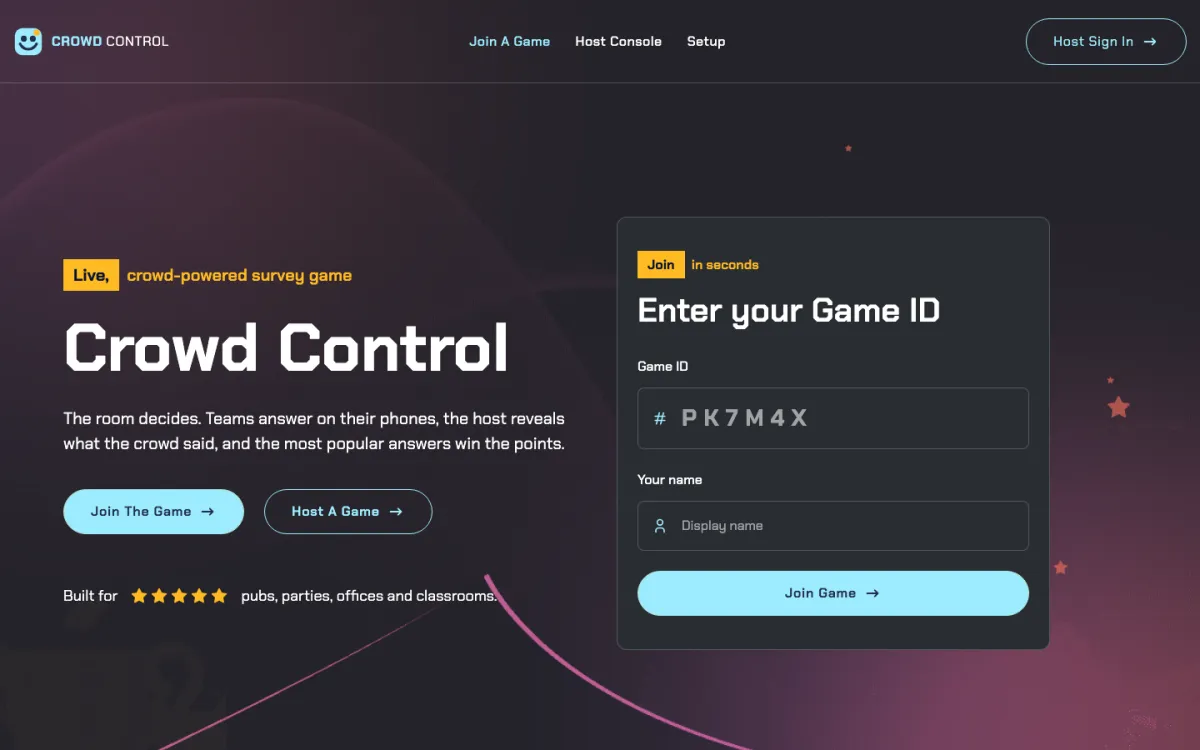
How it works
- Hosts build named, themed games with rounds and questions in an admin area, then run them live.
- Players join from their phones with a game ID.
- The player who starts a team becomes its captain and approves others who ask to join.
- Any teammate can submit the team’s answer, and it locks once submitted.
How scoring works
Matching answers are grouped and ranked by how many teams gave them, and each team scores by its answer’s rank. A game can also count answers remembered from earlier plays, or only the room in front of it. Number questions score by distance from the room’s median or by matching the most common answer.
Keeping a live room in sync
A live game has three audiences at once: the host running the show, players on their phones, and a shared screen the whole room watches. Each needs the right information at the right moment.
Each session runs in a Cloudflare Durable Object with WebSocket connections to all three, so answers, locks, and results reach everyone as they happen.
Built for live events
Crowd Control was built for Lemonadio, which hosts trivia, music bingo, and live games at Cape Cod venues. That setting shaped practical details: fast joining, clear team control, and answers that cannot be changed after they are submitted.
Bar Bluff was built from the Crowd Control codebase and adds a bluffing mode, in which players submit convincing false answers and vote to find the real one.
What this project demonstrates
Crowd Control shows how real-time software can coordinate many people in one room around a shared experience, with an administration side that lets hosts prepare and run games without technical help.